Building the Platform
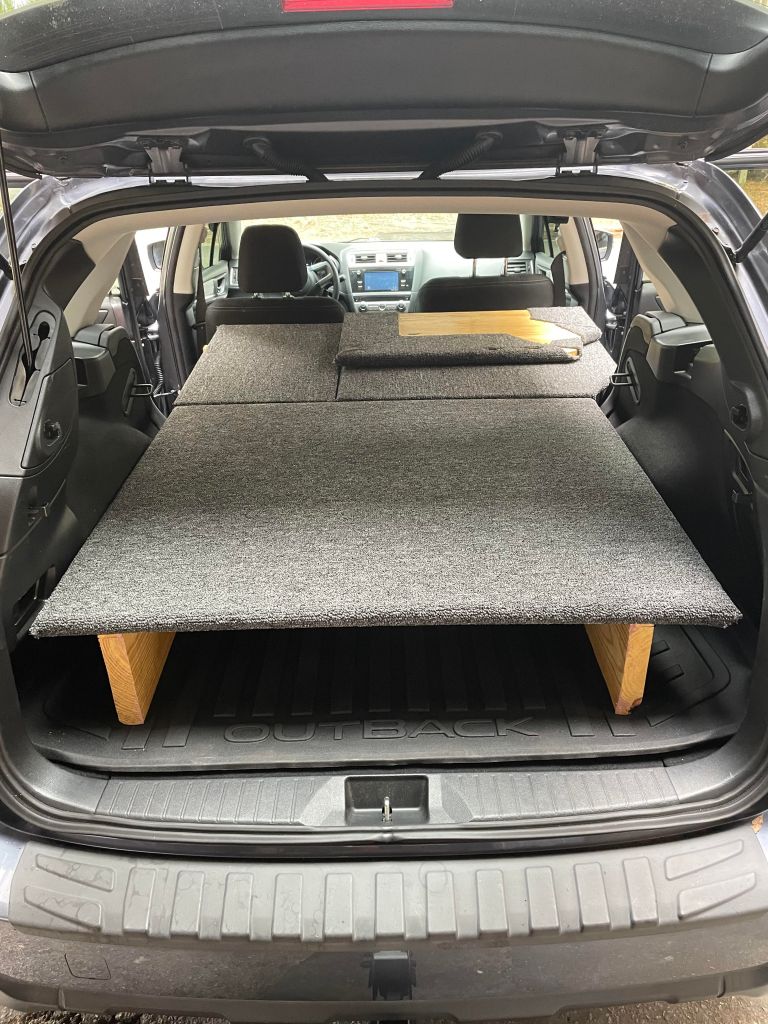
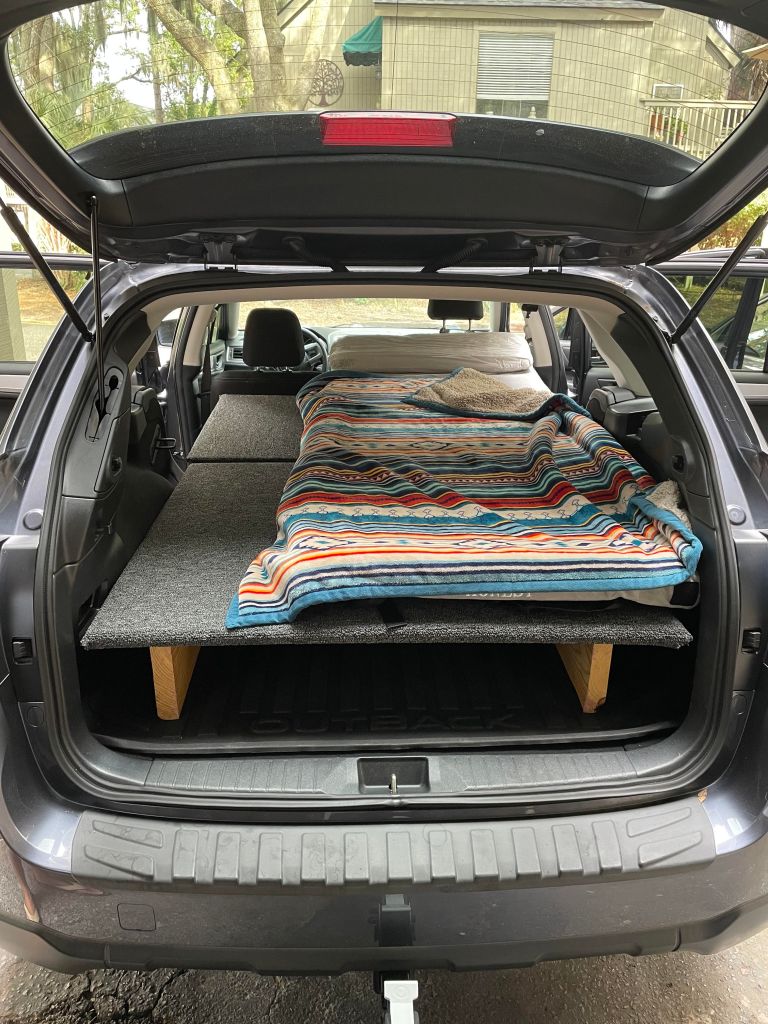
I created a carpeted platform with underneath storage for the Subaru Outback. I got tons of help from Dad, who has some good experience with this type of thing from renovating houses.

Sketches
Before cutting the wood, we took measurements of the car and planned out the platform design. We decided to use 2″x8″ wood slats for the support rails, join the rails with slots instead of screws, use carpeted plywood for the platform top, and create a hinged section directly behind the front passenger seat that extends flat by strapping to the front passenger seat head rest to give me the length I need to lay down.
Support Rails
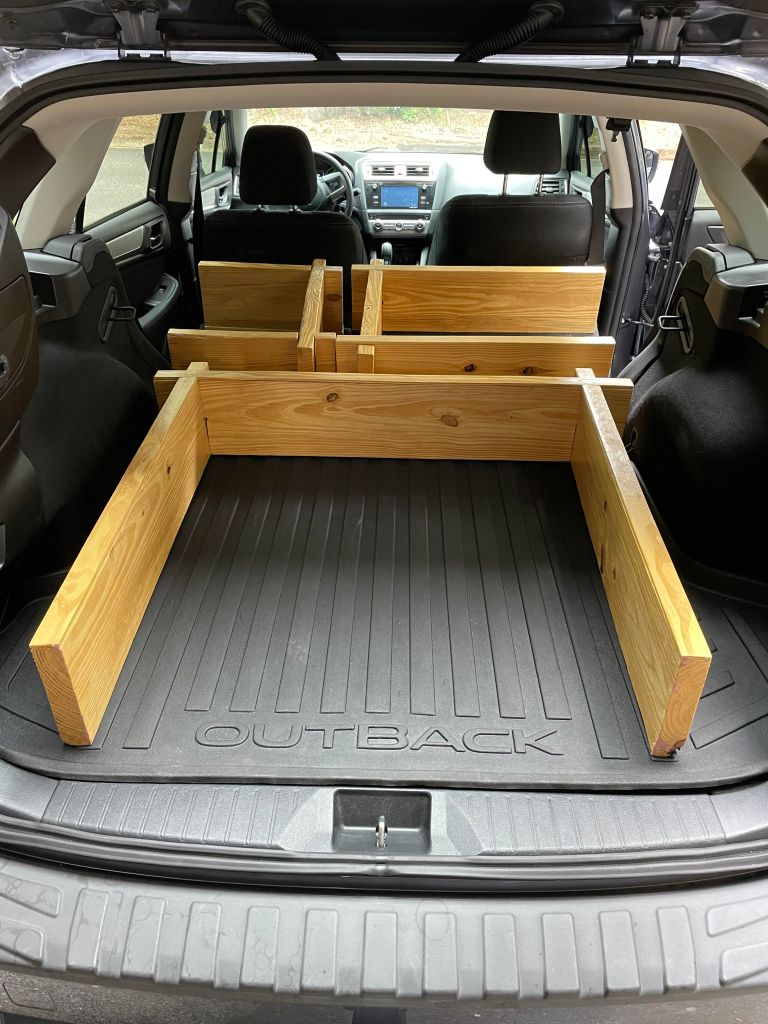
For the 2″x8″ support rails, we created three sets: one for the trunk area, one above the real passenger double seats, and one above the real passenger single seat. This allows each of the three sections to lay flush on each section of the car despite slightly different slopes for each section – making sure not to put disproportional pressure on the folded seats which might damage them. We cut slots in the rails so that the perpendicular rails can join together without the need to use screws or nails. This allows the rails to be installed and removed with ease.
Plywood Platform
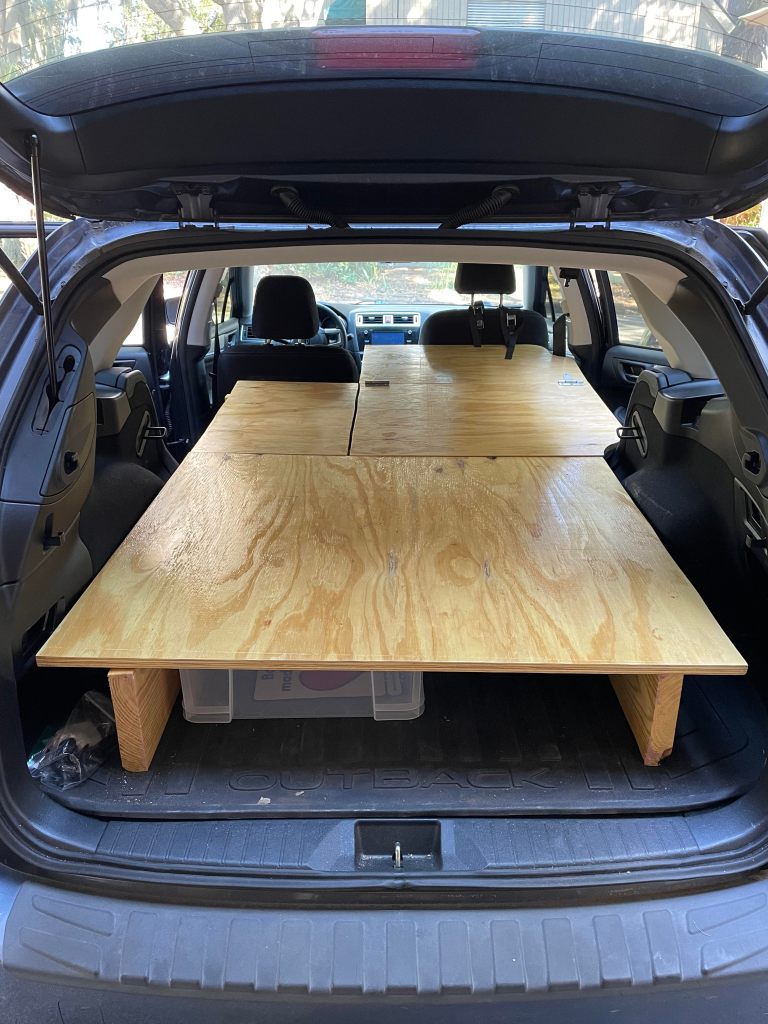
The plywood platform consists of three independent pieces that rest on the rails with no attachment needed. The pieces stay in place perfectly on the finished product. We cut the plywood to shape using the handheld ban saw that we used to cut the notches in the 2x8s. We used a thin blade for the curved edges which allowed the width of the sleeping platform to be as wide as possible while avoiding the wheel hubs. To get the length I need to lay flat, the platform has to extend past the folded rear passenger seats behind the front passenger seat. To accomplish this, we created a hinged section that straps to the front passenger seat head rest when the seat is in the forward-most position. The hinged section folds back over the rear passenger seats, allowing the front passenger seat to slide backwards into a useable position. We varnished both the rails and plywood to create a professional look and to prevent wood dust from dirtying the car’s interior.
Carpeting
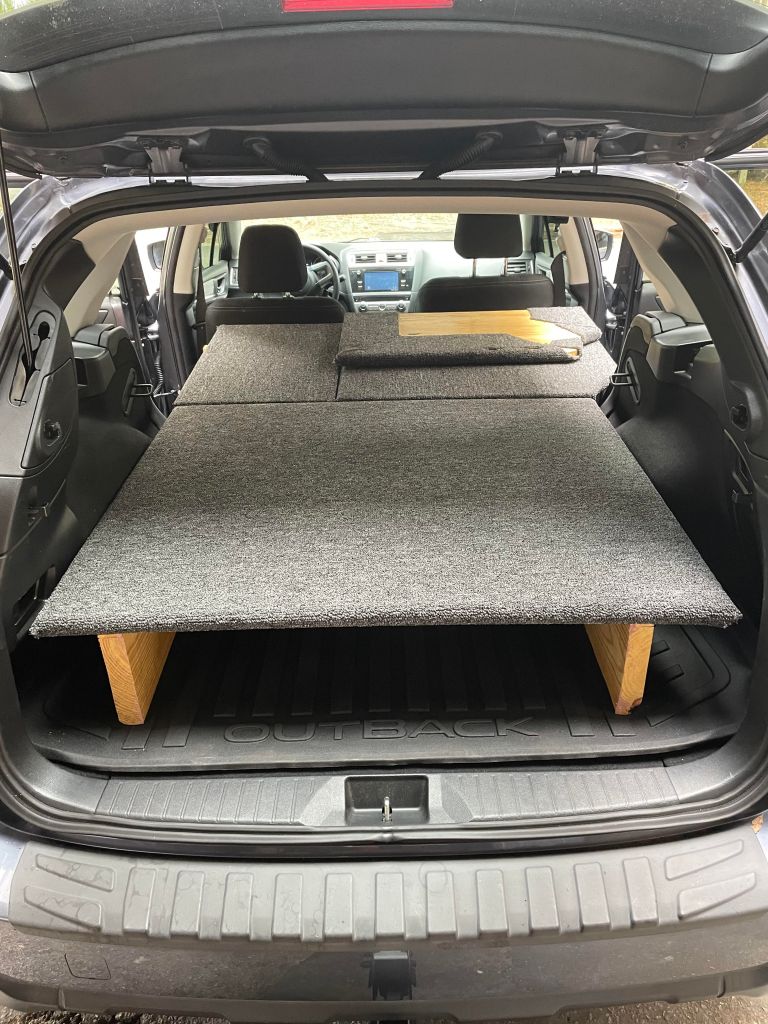
We covered the top of the plywood with indoor/outdoor carpet from Home Depot. We wrapped the carpet around the back perimeter of the plywood by about a foot so that the back carpet would rest on the rails. Wrapping the carpet round to the back creates a soft padding for the rails to eliminate noise while driving, prevents the plywood from sliding around on top of the rails, and creates carpeted side edges for the plywood sections to prevent the wood rubbing on the side of the car’s interior.
Mattress
We placed a foam camping mattress on the platform for me to sleep on. The mattress has a built in pillow and is very comfortable to the point that I can lay on my side comfortably. The length is perfect for me and fits perfectly on the platform. The thickness of the mattress does not add too much onto the height of the platform to where I’m too close to the car’s roof.

Final Product
The platform stores containers of 6″ nominal depth comfortably underneath the plywood. I have two large containers on trunk platform on the left of the car when viewing from the back (as pictured above). To the right, I store my camping gear and other miscellaneous items. Another large container fits underneath the platform behind the front passenger seat, and a medium sized container slides comfortably beneath the platform beside the driver’s seat. To the left of the bed, I store my cloathes in a suitcase which acts as my closet, in addition to my grill and some other items.
 Max Singleton